The Nigeria Labour Congress (NLC) has criticised its sister labour organisation, the Trade Union Congress (TUC) of Nigeria, for rejecting the negotiated N70,000 transport allowance for workers, describing the intervention as a significant relief amid rising petrol prices and the escalating cost of living.
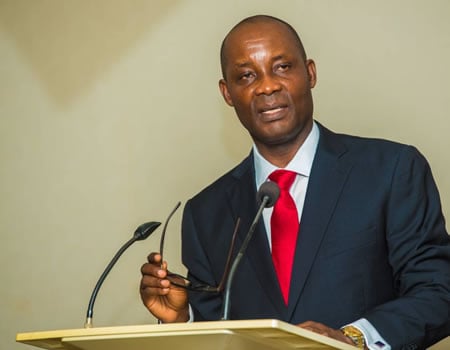
NLC President, Joe Ajaero, challenged the TUC to negotiate a better package for its members rather than condemn an agreement it was not involved in negotiating.
Ajaero spoke amid growing disagreements over the transport allowance, which was secured following negotiations with the Federal Government to cushion the impact of rising transportation costs on Nigerian workers.
Speaking on Channels Television, Ajaero said organised labour had been compelled to threaten industrial action before securing the intervention, stressing that workers had endured prolonged economic hardship without adequate relief.
“Nigerian workers were suffering; no intervention, nothing, and we have pushed with the threat of strike. We almost went on strike to get something, and then we got this,” he said.
Describing the agreement as a landmark achievement, the NLC president maintained that the six-month allowance represented an important intervention that should not be dismissed.
He, however, warned that the government must put a sustainable arrangement in place before the temporary relief expires.
On the TUC's opposition to the agreement, Ajaero questioned the basis of its criticism, arguing that the organisation could not reject an arrangement it did not participate in negotiating.
“The agreement was not signed by TUC, and you don't kick against something that you didn't negotiate,” he said.
He challenged the TUC to pursue a more attractive package if it considered the negotiated allowance inadequate.
“My appeal is that they (TUC) should go and ask for something higher. Let them ask for one million naira if they want.
“Is it better that they don't get anything?” Ajaero asked.
The NLC president further argued that the transport allowance could provide a foundation for broader negotiations covering workers across different employment categories.
He insisted that the six-month arrangement must not lapse without a new minimum wage framework that reflects prevailing economic realities, including rising transportation costs, food prices, housing and other essential expenses.
“We have to find a way out of it. It is not in favour of government to now stop paying and then there is no new minimum wage and there is nothing new,” he added.
Efforts to obtain the TUC's reaction to Ajaero's latest comments were unsuccessful.
The TUC Secretary-General, Nuhu Toro, answered a telephone call but said he was driving and promised to return the call upon reaching his destination. However, he had yet to do so as of the time of filing this report, while subsequent calls went unanswered.
NECA Warns Against Wage Agreements Without Employers' Participation
Meanwhile, the Nigeria Employers' Consultative Association (NECA) has warned that organised private-sector employers cannot be treated as parties to minimum wage agreements negotiated between the Federal Government and organised labour without their participation and concurrence.
The employers' body insisted that minimum wage determination must follow a tripartite negotiation process involving government, employers and workers as equal partners.
In a statement, NECA acknowledged the ongoing discussions between the Federal Government and organised labour, recognising concerns over workers' welfare, rising living costs and declining purchasing power.
However, it argued that bilateral negotiations between the government and labour unions could not replace the statutory tripartite framework required for minimum wage determination.
NECA cited relevant International Labour Organisation (ILO) instruments, including the Minimum Wage Fixing Convention, 1970 (No. 131), the Minimum Wage Fixing Recommendation, 1970 (No. 135), and the Minimum Wage-Fixing Machinery Convention, 1928 (No. 26).
It also referenced ILO Convention No. 144 and Recommendation No. 113, which reinforce the principles of consultation and social dialogue among government, employers and workers.
According to NECA, the involvement of the most representative employers' and workers' organisations is essential to ensuring that minimum wage decisions reflect the interests and economic realities of all parties.
“While NECA respects the right of Government and Organised Labour to hold bilateral discussions, such engagements cannot substitute for the statutory tripartite process,” the association stated.
It added that organised private-sector employers could not be deemed parties to, or contractually bound by, agreements reached without their participation and concurrence.
NECA, however, clarified that its position did not absolve employers of their responsibility to comply with any national minimum wage validly established under the National Minimum Wage Act.
The association stressed that it was not opposed to negotiations or a review of the national minimum wage but insisted that the process must be inclusive, transparent and evidence-based.
It maintained that any sustainable wage arrangement must balance workers' legitimate welfare demands with the economic realities confronting businesses.