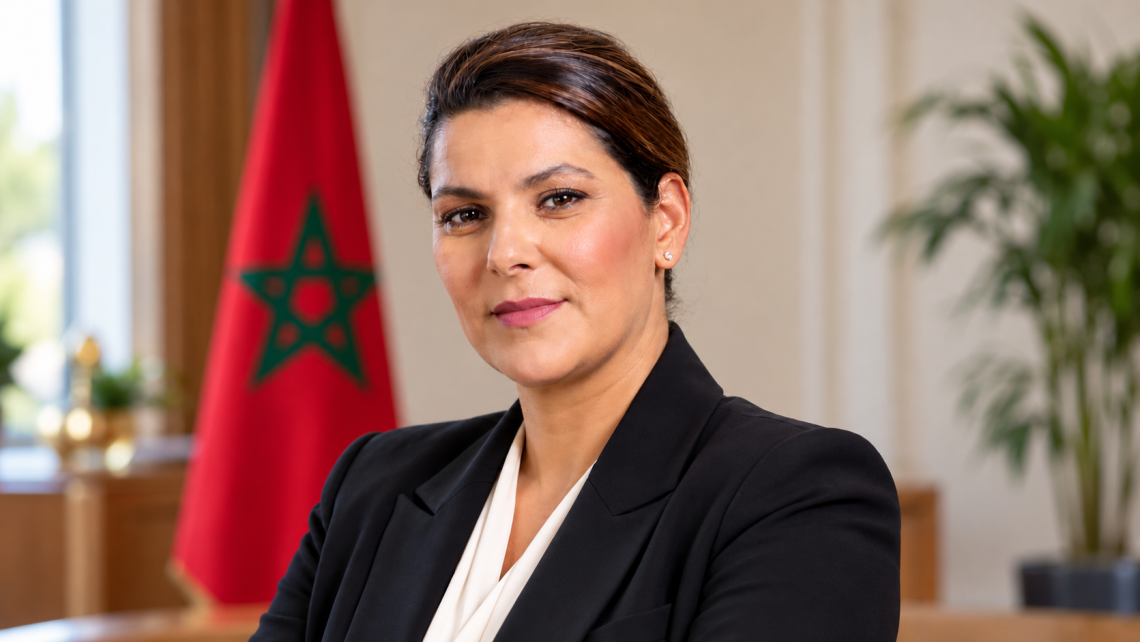
Morocco has appointed Fatima El Mansouri as its first female prime minister, marking a historic milestone in the country’s political history.
King Mohammed VI appointed El Mansouri after her centrist Authenticity and Modernity Party (PAM) emerged with the most seats in last week’s parliamentary election.
The 50-year-old politician becomes the second woman to head an Arab government, following Tunisia’s Najla Bouden, who served as prime minister from 2021 to 2023.
Describing her appointment as “truly historic,” El Mansouri said it represented a significant moment for Moroccan women.
“For the first time in our country’s history, a woman is taking on the responsibility of leading the government,” she said. “This is a source of pride not only for me but for all Moroccan women.”
Morocco is a constitutional monarchy with a parliamentary system, although the king retains extensive political powers. Under the constitution, the monarch appoints the head of government from the party that wins the largest number of seats in the House of Representatives.
According to the BBC, King Mohammed VI selected El Mansouri over Fouzi Lekjaa, Morocco’s football chief and a senior politician in the PAM.
El Mansouri is one of the country’s most prominent female politicians. She previously served as mayor of Marrakesh and was a minister in the former coalition government under ex-Prime Minister Aziz Akhannouch.
She held the portfolio covering national territory planning, urban planning, housing and city policy.
Before her appointment as prime minister, El Mansouri praised King Mohammed VI as “the biggest advocate for women” in Morocco.
“His Majesty is the holder of wisdom… If I am entrusted with the responsibility of head of government, it will be a great honour,” she said at her party’s victory conference.
In 2021, she rejected descriptions of her as an “iron woman”, saying: “I am neither a woman of steel nor iron… I am a free activist.”
Despite her prominence in Moroccan politics, El Mansouri has rarely made women’s rights and gender inequality central themes of her public statements.
Her appointment also comes with an immediate political challenge.
Although PAM won the most seats in parliament, it fell short of the 198 seats required for an outright majority, meaning El Mansouri will have to negotiate with other parties to form a governing coalition.
One of the new government’s major responsibilities will be overseeing billions of dollars in planned investments linked to Morocco’s preparations for the 2030 FIFA World Cup, which the country will co-host with Portugal and Spain.
Her government will therefore face the twin challenge of building a stable parliamentary coalition while managing major national development and infrastructure projects ahead of the tournament.