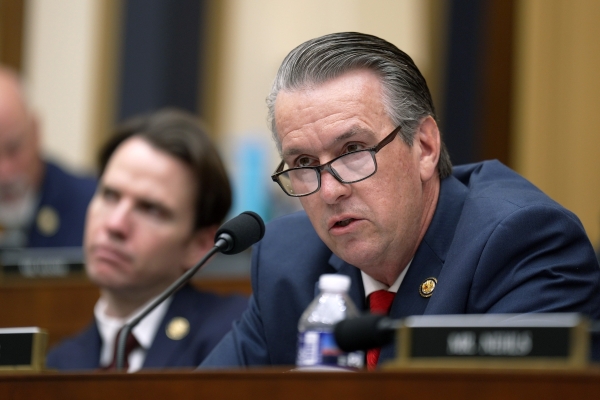
A member of the United States Congress, Rep. Riley Moore, has opposed any move to remove Nigeria from the US list of Countries of Particular Concern (CPC), citing continued attacks against Christian communities in the Middle Belt.
Moore made the position known in a post on his official X account while backing the US State Department’s call for the Nigerian government to strengthen protection for Christian communities following a deadly attack in Plateau State.
“We absolutely cannot remove the CPC designation from Nigeria while radical Islamic terrorists continue this horrific violence against Christians,” Moore said.
He added that the Nigerian government must fulfil its commitments to protect Christian communities and hold perpetrators accountable.
Moore was reacting to a statement by the US Bureau of African Affairs condemning an attack in Plateau State in which more than 24 people were reportedly killed, with others still missing.
The Bureau described the incident as a “murderous attack” in Nigeria’s Middle Belt and urged Abuja to protect vulnerable communities and ensure that those responsible were brought to justice.
US pressure mounts over Nigeria’s security situation
The latest statements could increase pressure on the Nigerian government as Washington continues to monitor religious freedom and security conditions in the country.
The United States designated Nigeria a Country of Particular Concern in 2020 under the International Religious Freedom Act over concerns about alleged systematic and ongoing violations of religious freedom. Nigeria was removed from the list in 2021 but remained under close monitoring.
The Trump administration subsequently restored Nigeria to the CPC list, with the US-Nigeria Joint Working Group holding meetings to assess the situation and measures being taken by the Nigerian government.
The designation is reviewed annually, with the next review expected in November.
The Nigerian government has repeatedly rejected claims that the violence is primarily religious persecution, arguing that insecurity in affected areas is driven by a combination of terrorism, banditry, kidnapping, communal disputes, competition over land and resources, and criminality.
Christian elders support US concerns
Meanwhile, the Christian Elders and Professionals Consultative Council of Nigeria (CEPCCN) has backed concerns raised by the United States over the worsening security situation.
In a statement signed by its National Chairman, Bishop Alpha Ikpeama, the group condemned attacks against Christians, churches, clergy and Christian communities while stressing that every Nigerian life deserves equal protection.
The council said credible reports of killings, kidnapping, persecution and displacement must receive urgent attention, regardless of the victims' religious affiliation.
“Protect Christians. Protect Muslims. Protect traditional communities. Protect every Nigerian. Justice must be universal, and the value of human life must never depend upon religious identity,” the group said.
CEPCCN called for thorough investigations into attacks allegedly motivated by religious identity and prosecution of those responsible.
It also urged the Federal Government to strengthen intelligence gathering, early-warning systems, rapid-response capabilities, community protection and judicial action against perpetrators.
The council acknowledged that Nigeria's security crisis is complex, involving terrorism, banditry, kidnapping, organised crime and communal conflicts, but insisted that the government’s primary responsibility remains the protection of citizens.
It further urged Abuja to engage international partners constructively and welcome assistance capable of strengthening Nigeria’s capacity to protect its citizens and combat terrorism.