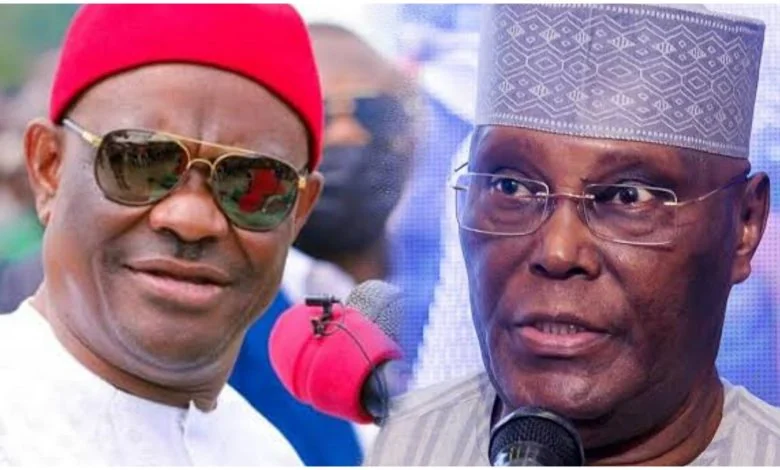
The political camp of former Vice President Atiku Abubakar has called on the Independent National Electoral Commission (INEC) to prosecute the Minister of the Federal Capital Territory (FCT), Nyesom Wike, over his promise to reward councillors with N10 million each for delivering their wards to the All Progressives Congress (APC) in the 2027 general elections.
Kenneth Okonkwo, spokesperson for Atiku, who is the African Democratic Congress (ADC) presidential candidate, accused Wike of engaging in alleged vote-buying, insisting that the financial promise amounts to electoral bribery under Section 125 of the Electoral Act.
In a statement posted on X on Wednesday, Okonkwo challenged INEC to investigate the minister and initiate prosecution, warning that failure to act would raise questions about the commission’s commitment to enforcing electoral laws.
“Wike’s offer of N10m to every Councillor who delivers his ward is pure vote buying and comes under the offence of bribery in Section 125 of the Electoral Act,” he wrote.
“If INEC does not prosecute Wike now, then let it be man enough to admit that it had sold the 2027 general election to the highest bidder.”
The demand followed Wike’s announcement on Monday at a Rainbow Coalition stakeholders’ meeting in Kwali Area Council of the FCT, where he promised N10 million to every councillor who successfully mobilises support for President Bola Tinubu and other APC candidates in the 2027 elections.
Addressing traditional rulers, political stakeholders and residents at the gathering, the minister urged councillors to engage community leaders, youth organisations and other groups to secure electoral support for the ruling party.
“Any councillor that delivers his ward will get N10 million reward. Therefore, go and meet your leaders, go and meet your youth groups and go and consult with associations. Let’s deliver our ward to Mr President,” Wike declared.
However, Wike on Tuesday dismissed allegations of vote-buying, maintaining that his offer was an incentive for political mobilisation and performance rather than an attempt to influence voters with money.
Speaking during an inspection of ongoing infrastructure projects in Abuja, the minister argued that he had asked councillors to work for electoral success, promising to reward them if they achieved their targets.
“I didn’t tell them, ‘Take this money and go and buy votes.’ I said, ‘Go and work. Show commitment. Demonstrate that you really mean what you are talking about. When you win, come and we are going to reward you,’” he said.
Wike likened the proposed payment to incentives given to athletes who win international competitions, arguing that governments and organisations routinely offer financial rewards, houses and other benefits to recognise outstanding performances.
He questioned why similar incentives in politics should automatically be classified as bribery, insisting that there was a distinction between rewarding political mobilisers and paying voters to influence their choices.
The FCT minister also criticised sections of the media over their interpretation of his remarks, arguing that political parties routinely spend money on campaign advertisements and other mobilisation activities without attracting similar criticism.
He further maintained that his support for Tinubu's administration was based on his assessment of its development agenda rather than party affiliation, urging Nigerians to support policies and programmes he believes would advance national development.
The controversy has brought renewed attention to the interpretation of electoral bribery provisions and the role of INEC in investigating allegations of financial inducements ahead of the 2027 general elections.