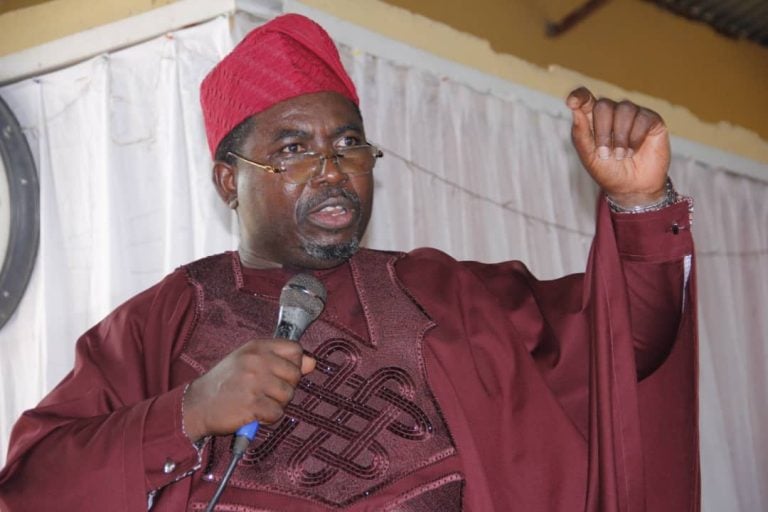
Former Vice President Atiku Abubakar has put the Federal Government’s controversial N75,000 conditional cash transfer programme under fresh scrutiny, demanding that the APC explain how it identified and paid millions of Nigerians it says do not even own mobile phones.
Atiku, the African Democratic Congress presidential candidate, directed the challenge at the National Chairman of the All Progressives Congress, Nentawe Yilwatda, following his claim that many beneficiaries of the government’s cash transfer programme are poor Nigerians without phones, television sets or access to social media.
Yilwatda had made the remarks while speaking with journalists after a three-day retreat of the APC National Executive Council in Maiduguri, Borno State.
According to him, the beneficiaries are largely vulnerable Nigerians who live outside the digital and media space and therefore cannot easily communicate, access social media or publicly challenge government claims.
But Atiku has now turned the claim into a question of accountability: if the beneficiaries had no phones, how exactly did the government find them, contact them and transfer the money?
Speaking in his Independence Day address on Thursday, Atiku specifically questioned how the programme operated in parts of Borno and Yobe, where insecurity can make access to vulnerable communities difficult.
“Professor Yilwatda says many beneficiaries have no phones. So how did your government identify, contact and pay them, particularly in parts of Yobe and Borno where insecurity makes access difficult?” Atiku asked.
He demanded details of the payment process, challenging the government to provide evidence showing how the beneficiaries received the money.
“Did officials deliver the money by hand? If so, who delivered it, and where are the receipts?” he asked.
Atiku also questioned whether the funds were transferred through bank accounts.
“If it went into bank accounts, show the transaction records. If you could find ten million people to pay, you can account for the payments,” he said.
The former vice president's challenge comes amid his broader criticism of the Tinubu administration's economic policies.
Atiku argued that Nigerians have faced intense financial pressure over the past three years, alleging that households are struggling with food costs, healthcare expenses and other basic needs.
“The past three years under Bola Tinubu have plunged Nigeria into the most severe cost of living crisis in our history. Families are not merely tightening their belts. They are skipping meals, delaying treatment and borrowing to survive until payday,” he said.
He also took aim at President Bola Tinubu's Independence Day declaration that Nigeria had moved beyond the period of “emergency treatment” and entered an “age of prosperity.”
But Atiku disputed the significance of such declarations without corresponding improvements in household finances.
“A president may announce a new chapter in a speech. He cannot put food onto a family’s table or money into a worker’s pocket,” he said.
The exchange places the Federal Government's cash-transfer programme and its claims about reaching vulnerable Nigerians at the centre of renewed political scrutiny, with Atiku demanding documentary evidence of how the beneficiaries were identified and paid.