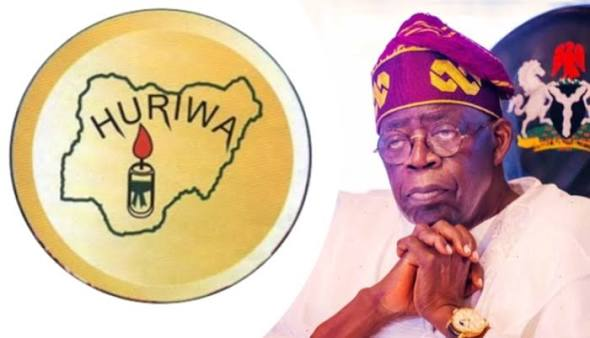
The Human Rights Writers Association of Nigeria (HURIWA) has criticised the Minister of Finance, Taiwo Oyedele, over comments projecting President Bola Tinubu’s chances of securing a second term in 2027, accusing him of prioritising political narratives over the economic hardship confronting Nigerians.
HURIWA said the minister should focus on addressing rising living costs, soaring petrol prices and widespread poverty rather than presenting international investors’ perceptions of Tinubu’s re-election prospects as a measure of the country’s political future.
The association’s National Coordinator, Emmanuel Onwubiko, stated this in a statement, urging Oyedele to concentrate on the economic responsibilities for which he was appointed instead of acting as a political promoter for the President.
According to HURIWA, Nigerians require concrete solutions to their worsening economic challenges, not assurances about what foreign investors, global financial institutions or international business interests may think about the 2027 presidential election.
The group argued that Oyedele’s suggestion that financial markets and the international community were already factoring in Tinubu’s possible second term represented his personal assessment, not a definitive verdict on Nigeria’s political future.
Onwubiko stressed that the decision on who becomes Nigeria’s next president rests with Nigerians, insisting that foreign investors and powerful business interests cannot determine the country’s electoral choices.
HURIWA also questioned the appropriateness of a senior economic official using an international economic gathering to discuss the President’s re-election prospects instead of outlining measures to tackle worsening hardship, stimulate productive sectors, create jobs and restore citizens’ purchasing power.
The association maintained that the government could not adequately defend its economic policies through political projections while millions of Nigerians struggled with the rising cost of basic necessities.
It challenged Oyedele to explain how the administration intended to ease the burden on workers whose earnings have been eroded by increasing food prices, transportation costs, electricity bills and other essential expenses.
The group further raised concerns over the Federal Government’s continued reliance on borrowing, arguing that reported increases in revenue collections should trigger greater scrutiny of public spending and fiscal discipline.
HURIWA questioned why borrowing remained a recurring feature of government financing despite reported improvements in revenue generation, calling for greater clarity on expenditure priorities and the management of public resources.