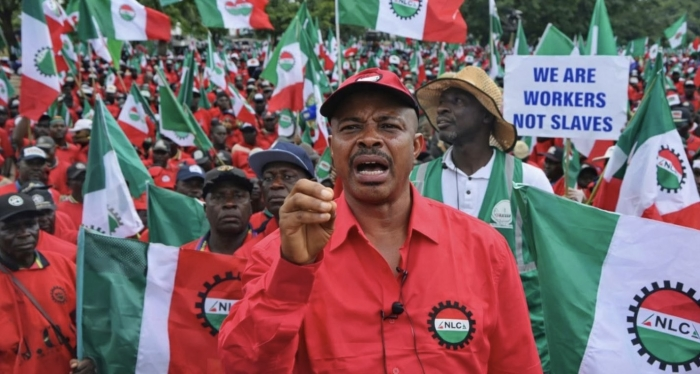
The Nigeria Labour Congress (NLC) has given the Federal Government a two-week ultimatum to reduce petrol prices, commence renegotiation of the national minimum wage and implement outstanding agreements with workers, escalating its confrontation with the Bola Tinubu administration over the worsening economic hardship.
The labour centre issued the ultimatum following a joint meeting of its National Executive Council (NEC) and Central Working Committee (CWC) at the Olaitan Oyerinde Hall, Labour House, Abuja, on Wednesday.
In a communiqué released on Thursday and signed by NLC President, Joe Ajaero, the union warned that failure to meet its demands within two weeks would compel it to take further action as directed by its relevant organs.
The deadline begins on Friday, with the union expressing grave concern over the country's economic situation and what it described as the growing struggle for survival among Nigerian workers and the wider population.
According to the NLC, rising inflation, pressure on the naira, declining purchasing power and soaring living costs have pushed millions of Nigerians into increasingly difficult conditions.
“The ruling elite, acting as enforcers of global monopoly capital, have demonstrated a worrying indifference to the suffering of the people, choosing instead to transfer the burden of their fiscal negligence onto the already impoverished working masses,” the communiqué stated.
The union accused the government of failing to adequately address the hardship confronting ordinary Nigerians, insisting that workers should not continue to bear the consequences of economic policies that have eroded their earnings and living standards.
NLC Demands Fresh Minimum Wage Negotiations
A major component of the ultimatum is the commencement of renegotiations of the national minimum wage before the end of October.
The NLC argued that the current minimum wage of N70,000 has lost significant purchasing power amid rising prices of food, housing, healthcare, transportation and education.
It maintained that the existing wage is increasingly inadequate to meet workers' basic needs, particularly as the naira's value continues to weaken against major foreign currencies.
The labour centre is demanding a living wage that reflects prevailing economic realities and guarantees Nigerian workers a reasonable standard of living.
The union also questioned the benefits of the Tinubu administration's economic reforms, arguing that the hardship experienced by ordinary citizens has yet to ease despite the government's positive assessments of some economic indicators.
It warned that further delays in renegotiating workers' pay would be unacceptable, insisting that wages must reflect the actual cost of living.
Petrol Price Must Return to 2024 Level
The NLC also demanded an immediate reduction in petrol prices nationwide to the level prevailing when the current national minimum wage was signed into law in 2024.
Petrol prices have climbed sharply since the removal of fuel subsidies, increasing transportation costs and putting additional pressure on household budgets and businesses.
The union cited petrol prices of about N1,330 per litre or higher in major cities, with consumers in some remote locations paying even more.
The latest price adjustments by Dangote Petroleum Refinery and the Nigerian National Petroleum Company Limited (NNPCL) have further highlighted the volatility of the downstream petroleum market.
The NLC argued that the high cost of fuel has contributed to increases in transportation fares, food prices and other essential commodities, worsening the financial difficulties faced by workers and low-income households.
In its communiqué, the union urged the government to:
“Take measures to reduce the price of petrol across the nation to what it was at the signing of the current national minimum wage in 2024 to cushion the impact of the energy crisis on workers and the masses, as is being done by other nations of the world.”
The labour centre further criticised policies that it believes have allowed high fuel prices to persist, arguing that the resulting economic burden falls disproportionately on ordinary Nigerians.
Tax Relief, Wage Awards Included
Beyond fuel prices and minimum wage negotiations, the NLC is demanding tax relief for workers in line with agreements reached with the government.
It also wants the immediate payment of outstanding wage awards intended to cushion the impact of rising living costs on employees.
“These measures are the bare minimum required to alleviate the suffering of Nigerian workers and restore a measure of dignity to their lives,” the communiqué stated.
The union insisted that the government cannot continue to demand sacrifices from workers without implementing measures to ease the economic pressures confronting them.
Health Workers, Public Sector Agreements
The NLC also called for the implementation of the Terms of Settlement reached with the Joint Health Sector Unions (JOHESU) and the Assembly of Healthcare Professionals on February 5, 2026.
It further demanded the implementation of outstanding demands of the Joint Public Sector Negotiating Council, adding to the list of unresolved labour issues confronting the Federal Government.
The demands underscore the union's concerns about the implementation of agreements reached between the government and organised labour across key sectors of the economy.
NLC Threatens Further Action
Although the NLC did not announce a specific strike date or disclose the precise form of industrial action it might undertake, it warned that the government would face further consequences if it failed to meet the demands within the stipulated period.
The communiqué stated that the union would be “compelled to take remedial steps as would be directed by the relevant organs.”
The warning places renewed pressure on the Tinubu administration to address labour's concerns over petrol prices, wages, taxation and outstanding agreements with public- and health-sector workers.
The NLC also urged its affiliate unions and progressive allies to remain on high alert and prepare for what it described as decisive efforts against policies considered detrimental to workers and the wider population.
Reaffirming its commitment to defending workers' rights, the labour centre called on Nigerian workers to remain organised, resolute and uncompromising in the struggle for what it described as a fairer and more equitable country.