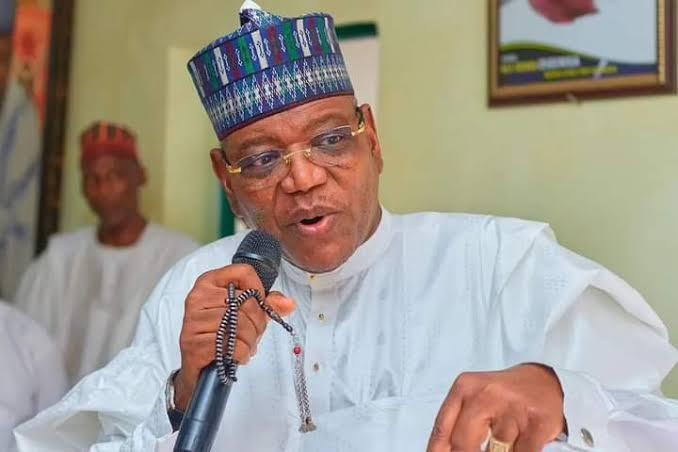
Former Jigawa State Governor Sule Lamido has launched a scathing attack on President Bola Tinubu, former Vice President Atiku Abubakar, Peter Obi and other prominent politicians, accusing them of lacking ideological convictions and contributing to Nigeria’s political instability.
Lamido, a founding member of the Peoples Democratic Party (PDP), said the frequent defection of politicians from one party to another reflected a political culture driven by the pursuit of power and personal interests rather than principles, public service and national development.
The former Minister of Foreign Affairs spoke with journalists in Dutse, Jigawa State, after inaugurating the PDP’s 2027 governorship campaign council.
He also dismissed the controversy over fuel subsidy removal as a distraction from what he described as Nigeria’s fundamental problems: indiscipline, corruption, weak institutions and the failure to enforce law and order.
According to Lamido, the country’s insecurity, poverty and economic hardship cannot be effectively addressed without tackling the underlying governance failures that allow public resources to be diverted by a privileged few.
“Tinubu, Atiku and Peter Obi are merely scratching the issue on the surface, talking about the symptoms without addressing the causes,” he said.
He argued that effective law enforcement would ensure that revenue generated from the petroleum sector reached ordinary Nigerians rather than being cornered by powerful individuals.
“If there is law and order, the money being generated from the fuel subsidy could go down to the people because nobody would be allowed to steal the money,” Lamido said.
He added that Nigeria’s inability to enforce basic rules, including traffic regulations, reflected a broader breakdown of discipline that had undermined governance and national development.
The former governor also accused the ruling All Progressives Congress (APC) and opposition parties, including the African Democratic Congress (ADC) and the Nigeria Democratic Congress (NDC), of being part of the problem.
“So, I don’t think those shouting about it would have the courage to enforce law and order because their people are the main beneficiaries of the current rot,” he alleged.
Lamido maintained that Nigeria’s widespread poverty was largely avoidable, arguing that the country possessed sufficient natural and human resources to improve living standards if public funds were properly managed and corruption decisively confronted.
Lamido Condemns Cross-Party Alliances Ahead Of 2027
The PDP chieftain also criticised the emerging political alliances ahead of the 2027 general elections, describing the involvement of politicians from different parties in the APC’s political activities as evidence of declining political morality.
He specifically questioned the political alignments involving Federal Capital Territory Minister Nyesom Wike, Anambra State Governor Chukwuma Soludo and Osun State Governor Ademola Adeleke, who are associated with parties outside the APC.
Lamido wondered how politicians could claim allegiance to different political platforms while simultaneously supporting another party, arguing that such arrangements exposed the absence of clear ideological boundaries in Nigerian politics.
“In a country where there is no moral radar, where anything goes, what do you expect? I mean, we have lost our self-worth, we have lost our essence as humans,” he said.
He insisted that the cross-party alliances were not new, recalling that similar political realignments contributed to the PDP’s defeat in the 2015 presidential election.
Lamido cited Atiku Abubakar, Rabiu Musa Kwankwaso and Bukola Saraki among prominent politicians who broke ranks with the PDP before the 2015 election that brought former President Muhammadu Buhari to power.
He argued that the emergence of the APC as a major political force was itself the product of a coalition of political parties and former PDP members, insisting that many of the political actors involved had retained the same interests and character despite changing platforms.
“The APC was a cocktail of PDP, ACN, CPC and ANPP,” he said, referring to the parties that came together ahead of the 2015 election.
According to Lamido, changing party affiliation does not necessarily translate into a change in political character, values or governing philosophy.
‘Tinubu Is Still Tinubu, Atiku Is Still Atiku’
The former governor further questioned whether Tinubu, Atiku and Obi had undergone any meaningful ideological transformation as they moved between political platforms.
“When you talk about Tinubu, he was in ACN. Has he changed? It is the same Tinubu.
“When you talk about Atiku, he contested elections under PDP in 2023. Has he changed? He remains the same Atiku.
“Obi contested for vice president in 2019 under PDP, then the presidency in 2023 under Labour Party and today under NDC. Has he changed? I don’t believe so,” he said.
Lamido warned that the movement of politicians between parties had become a recurring feature of the country’s political landscape, with party identities changing while the underlying political practices remained largely the same.
He also predicted that Wike could eventually become fully aligned with the APC ahead of another election cycle.
“You have the likes of Wike today. You will discover that in the next elections, he will be in the APC family,” he added.
Why Lamido Has Remained In PDP Since 1999
Explaining his decision to remain in the PDP since the beginning of the Fourth Republic in 1999, despite the party’s internal crises and electoral setbacks, Lamido said his political convictions were rooted in the ideological tradition of the defunct Peoples Redemption Party (PRP).
He identified former Kaduna State Governor Ahmed Makarfi as another politician from the same ideological background, arguing that their political upbringing instilled a commitment to principles that transcended electoral fortunes and personal ambitions.
Lamido said politics should be driven by human development, empathy, dignity and decency rather than the pursuit of appointments or positions of power.
“I have been myself because I am grounded in my ideological conviction, whereby we believe that politics is all about human development, human empathy, human dignity and decency. It is not a personal enterprise, looking for positions,” he said.
He maintained that many contemporary politicians lacked the ideological foundation needed to sustain political loyalty, describing them as individuals who readily switched parties whenever new opportunities emerged.
“In the entire Nigerian political history, it is only myself and Makarfi who are from the PRP ideological background. Others have no ideological political backgrounds, and that is why you see them moving from one party to another at the slightest opportunity,” Lamido declared.
He added that his political background had established boundaries he was unwilling to cross, regardless of the PDP’s challenges or the attractions of other political platforms.
Lamido’s remarks come amid growing political realignments ahead of the 2027 general elections, with politicians across party lines repositioning themselves as the battle for political control intensifies.