The Federal Government is seeking a fresh $500m loan from the World Bank to establish a major infrastructure financing platform, with the proposed approval date falling just four days before Nigeria inaugurates its next president on May 29, 2027.
The timing of the proposed borrowing is already drawing attention as Nigeria moves towards the 2027 general elections, raising questions about the scale of financial commitments the outgoing administration could leave for its successor.
According to a World Bank Initial Project Information Document obtained by The PUNCH, the proposed facility is part of a broader $3.85bn infrastructure financing initiative known as the Nigeria Infrastructure Financing and De-Risking Platform for Growth and Jobs (INFRAGROW).
The document, prepared and updated on November 4, 2026, indicates that the World Bank has scheduled May 25, 2027, for the project's approval, barely 96 hours before the next presidential inauguration.
The Federal Ministry of Finance is listed as the borrower, while the Nigeria Sovereign Investment Authority will serve as the implementing agency.
The World Bank has scheduled the project's technical design review for January 21, 2027. However, the proposed financing has not yet received approval, and the timetable remains subject to change.
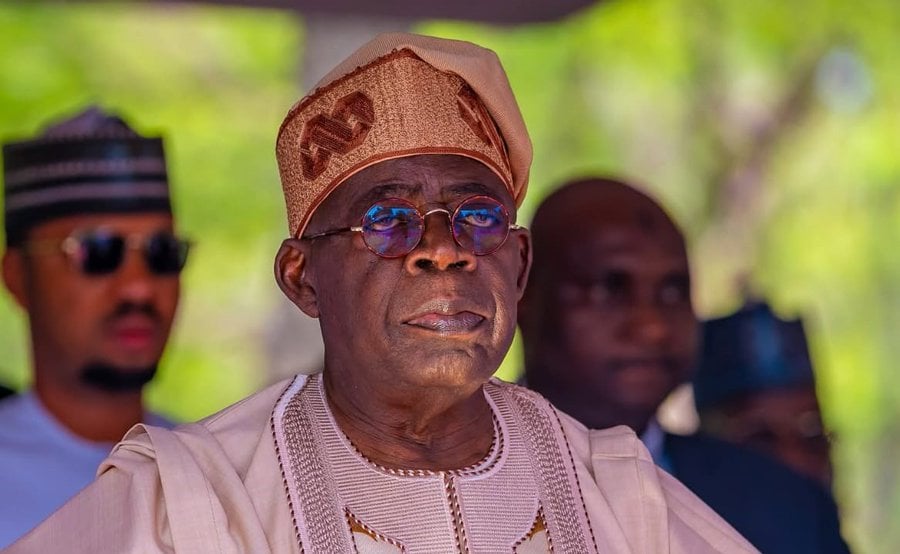
Nigeria's presidential inauguration is constitutionally scheduled for May 29, 2027, following the expiration of President Bola Tinubu's current four-year tenure.
Although approval would not automatically trigger immediate disbursement or implementation, the proposed timeline could place a major financial commitment before the incoming administration even assumes office.
Nigeria's $100bn Annual Infrastructure Deficit
The World Bank estimates that Nigeria faces an annual infrastructure financing gap of approximately $100bn, describing the shortfall as a major obstacle to economic growth, fiscal sustainability, competitiveness and job creation.
The document states that the challenge goes beyond inadequate funding, pointing to weak project preparation and the difficulty of converting available capital into commercially viable infrastructure investments.
It noted that bridging the gap would require a combination of rigorous project preparation, targeted risk-reduction instruments and sector-specific reforms capable of attracting private investment.
According to the proposed financing structure, the World Bank's $500m contribution would comprise $400m from the International Bank for Reconstruction and Development (IBRD) and $100m from the International Development Association (IDA).
The wider $3.85bn initiative is expected to attract funding from government, private investors, commercial lenders and international financial institutions.
Under the arrangement, the Nigeria Sovereign Investment Authority is expected to contribute $200m in equity as a founding shareholder, while private investors would provide another $200m.
Commercial debt financing is projected at $600m, alongside additional financing arrangements and guarantees.
The proposal also includes $100m in IDA payment guarantees and $2.25bn in guarantees from other international financial institutions, bringing the total guarantee-related arrangements to $2.35bn.
Four Major Financing Vehicles
The proposed INFRAGROW platform will operate through four independently governed subsidiaries designed to address different barriers to infrastructure investment.
The first, the Project Preparation Facility, will finance feasibility studies, transaction structuring, risk assessments and procurement support to transform infrastructure proposals into investment-ready projects.
The second, the Viability Gap Fund, will provide financial support for economically important projects that cannot generate sufficient commercial returns while maintaining affordable tariffs or sustainable government payments.
The World Bank explained that the proposed endowment model would preserve the fund's capital base while financing viability-gap support primarily through investment returns.
The third, the Risk Capital Facility, will provide equity and other forms of patient capital to commercially viable infrastructure projects struggling to attract investors because of their higher risk profiles.
The fourth, the Credit Guarantee Vehicle, will provide guarantees against specified credit defaults, public-sector payment failures and political risks affecting eligible foreign investments.
The facilities are expected to encourage greater participation by commercial banks, pension funds, insurance companies and other institutional investors.
IFC, MIGA To Support Investment Mobilisation
The proposed project will also involve the International Finance Corporation as a prospective co-investor, while the Multilateral Investment Guarantee Agency is expected to provide political risk insurance.
Beyond financing, the initiative will support institutional reforms aimed at strengthening government agencies responsible for identifying, preparing, procuring and supervising public-private partnership projects.
Implementation will be organised around four components covering institutional development, project preparation, financing mobilisation and improvements to the regulatory environment.
The first component will support staffing, professional advisory services, statutory fees and operational infrastructure, with disbursements linked to measurable institutional milestones.
The second will strengthen project preparation and financial viability, while the third will activate the risk capital and credit guarantee facilities.
The fourth will improve government capacity to manage infrastructure partnerships and the fiscal risks associated with them.
Describing the initiative, the World Bank stated that the proposed INFRAGROW project was an institution-building and private capital mobilisation operation intended to expand sustainable infrastructure development in Nigeria.
World Bank Flags High Environmental And Social Risks
Despite its potential to attract substantial private investment, the World Bank has classified the proposed project's environmental and social risks as high.
The classification reflects the possibility that infrastructure investments in critical sectors, including energy, transport and water, could result in land acquisition, community displacement, environmental damage, occupational hazards and other social consequences.
The bank's assessment underscores the need for appropriate safeguards, particularly as the proposed platform is designed to mobilise billions of dollars for large-scale infrastructure projects.
With the proposed May 25, 2027 approval date falling just four days before the presidential inauguration, attention will likely focus not only on the project's economic benefits but also on the financial and institutional obligations that could extend into Nigeria's next administration.