
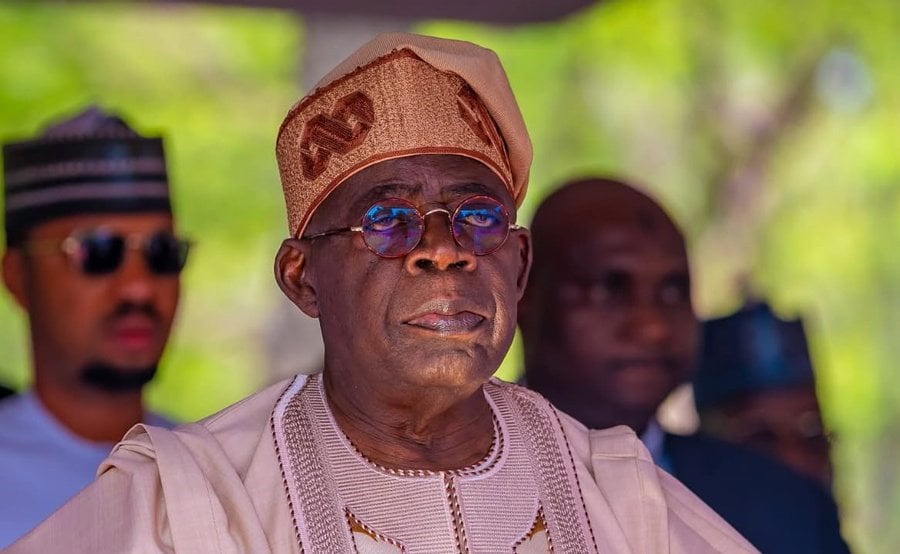
President Bola Ahmed Tinubu has removed the Chief Executive of the Nigerian Midstream and Downstream Petroleum Regulatory Authority (NMDPRA), Saidu Mohammed, barely four months after his appointment.
The decision, announced in a State House statement, was made in the “public interest” and comes amid mounting challenges in Nigeria’s downstream petroleum sector, particularly the ongoing aviation fuel crisis.
To fill the vacancy, the President has nominated Rabiu Abdullahi Umar as the new head of Nigerian Midstream and Downstream Petroleum Regulatory Authority, pending Senate confirmation in line with the Petroleum Industry Act (PIA) 2021.
Mohammed, who assumed office on December 22, 2025, had a brief tenure following his confirmation days earlier. He succeeded Farouk Ahmed, whose earlier exit had already hinted at instability within the regulatory body.
Fuel crisis and sector pressure
The leadership shake-up comes at a time when Nigeria’s aviation industry is grappling with a severe Jet A-1 fuel crisis. Global supply disruptions linked to tensions in the Middle East — particularly involving Iran and Israel — have affected key shipping routes like the Strait of Hormuz, driving up crude prices and limiting refined product supply.
Locally, this has led to fuel shortages at major airports, forcing airlines such as Air Peace and Arik Air to scale down operations.
In response to industry pressure, the regulator recently introduced a pricing framework for aviation fuel, pegging it at ₦2,037 per litre in Abuja and between ₦1,760 and ₦1,988 in Lagos — a reduction from previous highs exceeding ₦3,000 per litre.
Still, airlines say costs remain unsustainable. The cost of fuelling aircraft like the Bombardier CRJ 900 or Airbus A220 has surged by over 350 percent, rising from about ₦2.1 million per flight in January to roughly ₦7.6 million by late April.
New leadership expectations
Umar, the nominee, brings over 25 years of experience across energy, manufacturing, and infrastructure. A graduate of Bayero University and alumnus of Harvard Business School, he is expected to stabilise the agency and navigate ongoing regulatory challenges.
Analysts say the leadership change signals Tinubu’s push to strengthen oversight, improve fuel pricing transparency, and address inefficiencies in the sector.
Experts react
Industry stakeholders have largely backed the decision.
Olumide Ohunayo of the Aviation Round Table Initiative criticised lapses in fuel pricing oversight, noting that the presence of multiple middlemen distorted supply and pricing, especially during the global crisis.
He stressed that regulators must ensure transparency, quality control, and consumer protection, warning that inefficiencies in aviation fuel supply could have wider economic consequences.
“When aviation sneezes, the entire country catches a cold,” he said.
Similarly, Billy Gillis-Harry of PETROAN said the transition should not disrupt operations but urged continuity in reforms.
Meanwhile, economist Muda Yusuf called for stronger policies to encourage investment in local refining capacity, including support for major projects like the Dangote Refinery.
He noted that boosting domestic refining would enhance energy security and reduce Nigeria’s vulnerability to global shocks.






Login Required
Loading login form...